Bird Watching Levels: From Beginner to Expert - Your Progression Guide
Explore the different levels of bird watching expertise and discover how to advance from casual observer to expert birder with practical milestones and challenges.
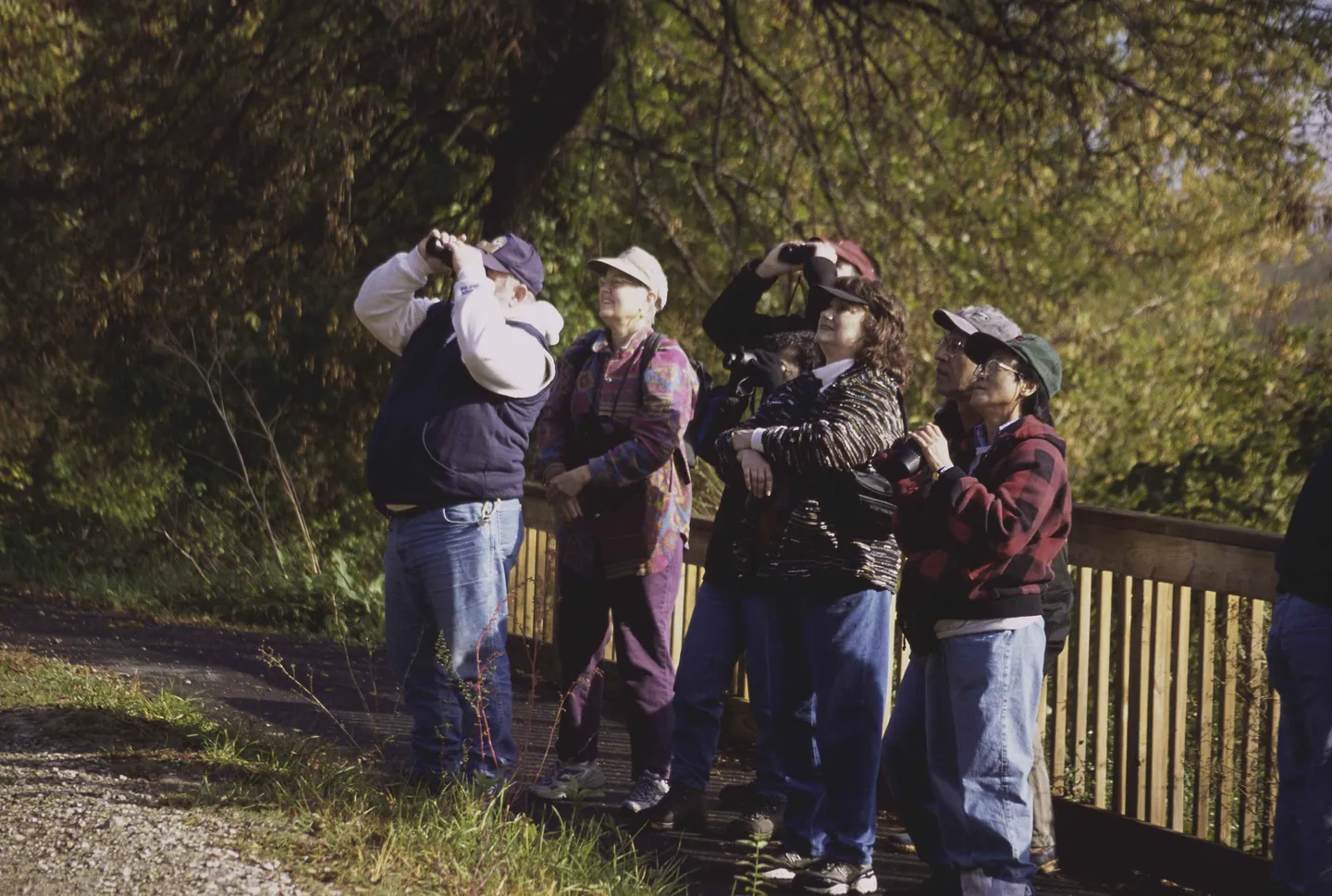 Public domain · Wikimedia Commons
No need to guess what you just saw or heard
Wondering if you're actually improving? Every identification you confirm in BirdTune builds a record you can look back on: proof of progress that memory alone won't give you.
TL;DR: Birders tend to move through five recognizable stages (casual observer, enthusiastic beginner, intermediate birder, advanced birder, and expert) each marked less by time spent and more by specific milestones: species known, identification methods mastered, and depth of habitat knowledge.
There's no test that promotes you from one birding level to the next, and no two birders progress on the same timeline. But most birders do pass through the same recognizable stages, and knowing what marks each one gives you something concrete to aim for instead of a vague sense that you should be "getting better."
Casual Observer: Learning the Regulars
At this stage, birding usually means watching from a window or a backyard feeder rather than seeking birds out. Equipment is minimal or nonexistent, and the goal is simply recognizing the handful of species that show up regularly: a Northern Cardinal, a House Sparrow, a Mourning Dove. The real milestone here isn't a species count; it's the shift from "birds" as an undifferentiated category to specific, nameable individuals you notice returning.
Setting up a single feeder and keeping even an informal running list of who visits is enough to move through this stage. Our guide to attracting birds to your backyard covers what to put out first. Most casual observers reach it within a few weeks of paying regular attention.
Enthusiastic Beginner: Seeking Birds Out
The defining shift at this stage is intent: you start going places specifically to bird, rather than noticing birds while doing something else. Binoculars and a field guide (or one of the best bird identifier apps) become regular companions, and identification starts to include sound alongside sight, since many species are heard long before they're seen.
This is also where similar-species confusion becomes a real, motivating problem: telling a Song Sparrow from a Chipping Sparrow, or a Downy Woodpecker from a Hairy Woodpecker, forces closer attention to field marks than backyard birding ever required. Working through that confusion, rather than avoiding it, is what actually builds the stage's core skill.
Intermediate Birder: Building a Real Framework
By this stage, birding has usually become a primary hobby rather than an occasional activity, and identification starts to rely on a genuine mental framework (size and shape first, then pattern, then behavior and habitat) rather than matching a photo to a memory. Recognizing bird families by silhouette alone, before any color registers, is a reliable marker of this stage.
Many intermediate birders also start contributing to citizen science counts or mentoring someone newer, which reinforces their own knowledge in the process of explaining it to someone else. Our guide to improving your bird watching skills is built specifically for birders at this stage who want structured drills rather than just more field time.
Advanced Birder: Specialization and Depth
Advanced birders typically develop a specialization: a bird family they know unusually well, a specific habitat type they can predict accurately, or a regional expertise built from repeated visits to the same locations. Identification of genuinely difficult groups (gulls, sparrows in fall plumage, flycatchers by call alone) becomes routine rather than exceptional.
This stage is also where birders start noticing what a location "should" hold based on habitat and season, and treating an absence as informative: the lack of an expected species becomes a data point, not just a quiet outing.
Expert Birder: Contributing Back
At the expert level, birding knowledge starts flowing outward: through mentoring, leading walks, contributing meaningfully detailed records to research databases, or specializing deeply enough to notice population or range shifts before they're widely reported. Few birders reach this stage primarily to reach it; it tends to be a byproduct of years of the habits built at every earlier stage, sustained rather than accelerated.
Recognizing Your Own Plateau
Every stage has a point where progress stalls: usually because the habits that worked at the previous level stop being enough. The most common fix isn't more field time at the same intensity, but a deliberate change: a new habitat type, a focus on sound instead of sight, or structured practice instead of open-ended outings. How to improve your bird watching skills breaks down exactly what that structured practice looks like.
Try it on the next bird you hear
Progress in birding shows up in the identifications you make confidently without hesitation. BirdTune tracks every species you identify by photo and sound, building a record of where you started and how far you have come: alongside 500+ identifications logged daily by birders at every level.
FAQ: Bird Watching Levels
How many species should I know before I'm not a beginner anymore?
There's no fixed number, but a rough marker is confidently naming 25-50 species by sight and sound without checking a reference: at that point, most birders feel the shift from "beginner" to "capable." What matters more than the count is whether identification feels automatic for your regular local species.
Can you skip stages by studying hard instead of spending time in the field?
Not really. Studying builds knowledge, but identification speed and confidence come from repeated real-world exposure: hearing the same call across dozens of contexts, seeing the same species in different light and postures. Study accelerates progress within a stage; it doesn't substitute for field time.
Is it normal to feel stuck at the same level for a long time?
Yes, and it's one of the most common experiences birders report. A plateau usually means the current approach has stopped producing new challenges, not that progress has stopped being possible. Changing habitat, focus, or practice method is typically what breaks it.
Do birders ever regress to an earlier level?
Not in skill, generally, but engagement can drop and pick back up. Someone who steps away from birding for a year or two usually finds their identification instincts return quickly once they're back in the field, even if the habit of active birding needs to be rebuilt.