How to Find Local Birding Spots and Groups: Your Complete Guide to Birding Community
Discover the best local birding spots and connect with birding communities in your area. Learn how to find birding groups, hotspots, field trips, and build lasting friendships with fellow birders.
 Public domain · Wikimedia Commons
No need to guess what you just saw or heard
Found a promising new spot but not sure what's actually there yet? Point your phone at anything unfamiliar and BirdTune names it on the spot.
TL;DR: The fastest way to find good local birding is to check an eBird hotspot map for your area, then find one local group (a birding club, an Audubon chapter, or a Facebook group) since most productive spots and most useful tips come from people who already bird there regularly.
Birding gets noticeably better once you're not doing it entirely alone. Someone who's already scouted the local wetland knows exactly where the rails hide; someone in a local group can tell you a rare migrant showed up an hour ago. Finding spots and finding people tend to happen together, not as separate projects.
Finding Productive Locations Near You
eBird's hotspot map, maintained by the Cornell Lab of Ornithology, is the single most useful starting point: it shows every location where birders have logged sightings, ranked by species diversity, so you can see at a glance which nearby park or wetland is actually productive rather than guessing. Cross-reference that with your local Audubon chapter's website, which often lists sanctuaries, sponsored trips, and locations with restricted or seasonal access that a general map won't flag.
Beyond the obvious parks, a few overlooked location types consistently outperform expectations. Cemeteries, especially older ones with mature trees, are frequently among the best urban birding spots because they combine large trees, minimal disturbance, and open ground. Water treatment ponds and retention basins, unglamorous as they sound, reliably draw waterfowl and shorebirds that a landlocked park never will. Botanical gardens and university campuses, with their varied, deliberately planted vegetation, punch above their size for species diversity.
Evaluating a New Spot Before You Commit
Not every green space on a map is worth the trip. Habitat variety is the strongest predictor of species diversity: a location with a mix of open water, tree cover, and brushy edge will consistently outperform a single uniform habitat type, even a large one. Check the season too: a spot that's excellent during spring migration can be nearly silent in mid-summer, so a single unproductive visit doesn't necessarily rule a location out.
Accessibility is worth weighing honestly against your own routine. A spectacular but 45-minute-away wetland you visit twice a year teaches you less over time than a decent 10-minute park you visit weekly, simply because repetition at one location builds a baseline that makes anything unusual stand out immediately.
Finding a Local Birding Group
Most regions have at least one active Audubon chapter or independent bird club running scheduled field trips, and these are usually the fastest way to meet experienced local birders who know the area cold. Search "[your region] Audubon" or "[your region] bird club," and check whether they list a public trip calendar: most do.
Beyond formal clubs, Facebook groups and local birding subreddits fill a different role: faster, more casual sharing of what's around right now, rather than scheduled outings. Meetup also hosts informal birding groups in many metro areas, often lower-commitment than a club membership. If none of these turn up anything nearby, your nearest nature center or wildlife refuge visitor's desk almost always knows who's active locally, even if that group doesn't have much of an online presence.
Getting the Most Out of Your First Group Outing
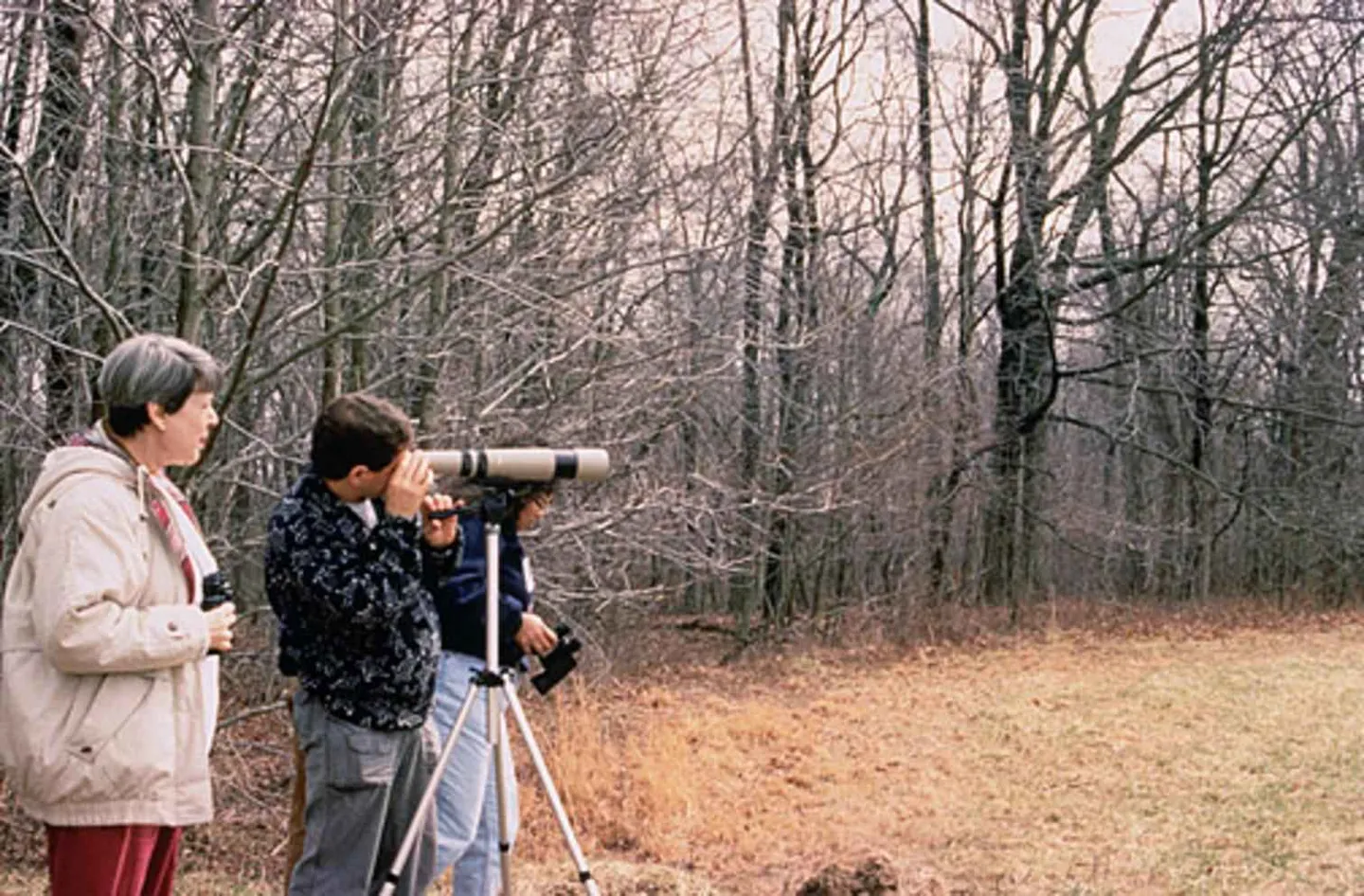
Show up with modest expectations for your own performance and high expectations for what you'll learn. Group trips move at the pace of the most experienced birders present, which can feel fast at first, but following along and asking what specific field mark led to an identification teaches more per hour than a solo outing usually does. Most groups are genuinely welcoming to beginners: birders as a community tend to remember being new themselves.
Bring binoculars if you have them, but don't let missing gear stop you from attending; most groups have members willing to share a spotting scope view or point out a bird well enough that you don't strictly need your own optics for a first trip.
Building Your Own Local Network Over Time
Consistency does more for community-building than any single event. Returning to the same group's trips, the same local patch, and the same online community repeatedly is what turns acquaintances into birding friends who'll text you when something rare shows up. Sharing your own sightings (even common ones) is part of that exchange; a community where only the impressive finds get shared isn't really a community.
Try it on the next bird you hear
The best birding often starts with a tip from someone who was just there. BirdTune connects you to a live stream of nearby sightings from birders in your area (part of a community logging 500+ identifications daily across 50+ countries) so your next spot is never more than a notification away.
FAQ: Finding Local Birding Spots and Groups
How do I find birding hotspots if I'm traveling somewhere new?
Check eBird's hotspot map for your destination before you go: it works identically anywhere in the world with active users, and it's the fastest way to identify productive spots in an unfamiliar area without local knowledge.
What if there's no birding club in my area?
Look one tier up geographically: a county or regional club may cover a wider area than you'd expect, even if there's nothing city-specific. Online communities (Facebook groups, regional birding forums) are also a legitimate substitute when no in-person group exists nearby.
Do I need to be an experienced birder to join a group outing?
No. Most clubs and Audubon chapters run beginner-friendly trips specifically, and even advanced trips are usually welcoming to newcomers who ask questions. The only real prerequisite is genuine interest.
Is it worth joining a birding group if I mostly bird alone by choice?
Even occasional group participation adds value beyond social connection: it exposes you to identification techniques, local knowledge, and species you might not encounter solo. Many committed solo birders still attend group trips a few times a year specifically for that exposure.